Get Ready for an Energy Revolution
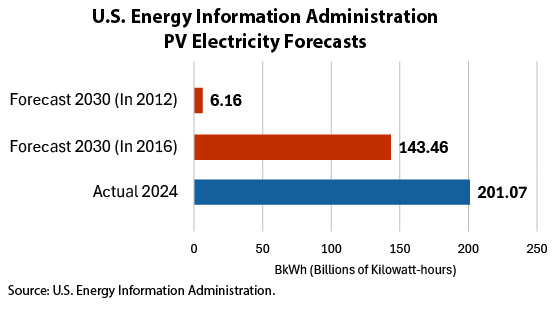
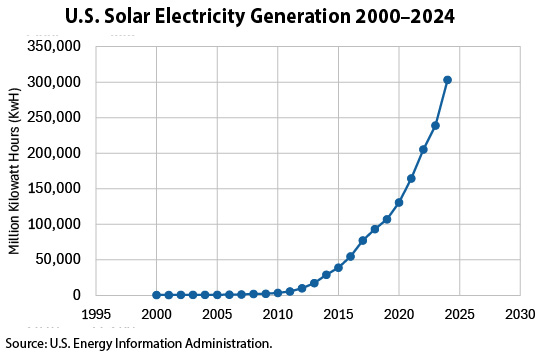
In 2012, photovoltaic (PV) electricity was a tiny but fast-growing industry. In that year, the U.S. Energy Information Administration (EIA) forecast that PV capacity would triple in less than three decades: the U.S. would generate 6.16 BkWh1 of grid electricity from PV power by 2030. Instead, solar went exponential. By 2016 PV electricity generation had zoomed above 19 BkWh—more than five times the amount forecast for the year 2030 by the EIA back in 2012.
The forecast-shattering trend has not stopped. In 2024, the U.S. generated over 201.7 BkWh of solar power. This is 40 percent more than the IEA forecast back in 2016 for the year 2030. U.S. solar generation grew by a factor of nine from 2014 to 2024. In short, forecasts in recent years have consistently undershot the exponential growth that is occurring in solar energy.
There are qualifying factors. Solar electricity is affected by weather and season. Solar requires storage, and must be balanced with other sources to maintain steady power flow. Technologies for countering these issues are also growing exponentially—especially battery storage. Federal policies have shifted over the past year, and this will slow the growth in solar energy—but only slightly.2
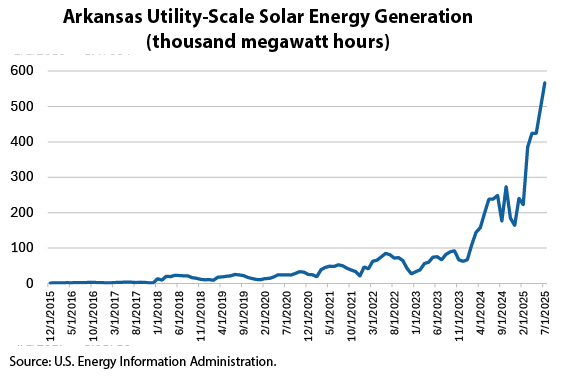
What about Arkansas? It lags in clean energy trends, right? Yet state solar electricity has roughly quadrupled in the past two years.3 Solar output that was negligible as recently as 2017 is now powering factories, EV charging stations, houses, offices, and farms.
What is happening with solar power today is less a clean energy agenda than a technological revolution, propelled by continuing cost reductions to inputs like the polysilicon for solar panels. Impacts will go far beyond potentially reducing carbon emissions. When energy gets cheaper, people use it more. Power-intensive practices that were once too expensive will become affordable.4 Just as the advent of coal energy once jump-started industrialization, PV electricity has the potential to transform the world as we know it.
1 Billion Kilowatt-hours.
2 Rachel Dobbs, “The Power of Positive Tipping Points,” Economist August 15, 2025.
3 Conservative estimate, making allowance for seasonal variations.
4 “The Sun Machines,” Economist, June 22 2024.
Electric Vehicles
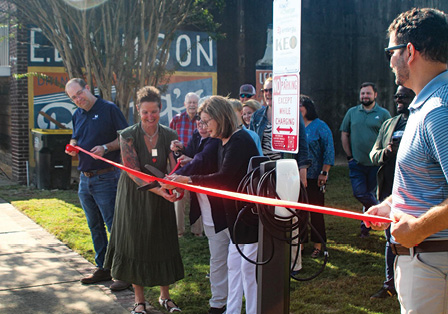
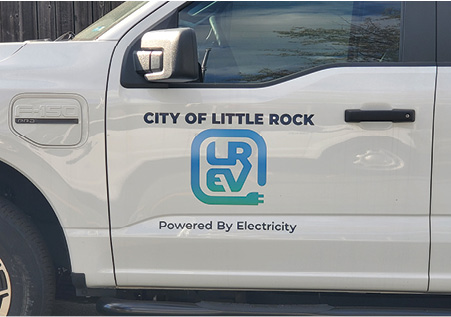
While EVs remain a small portion of the vehicle fleet, their use is growing rapidly. With the help of a CPRG grant* from the EPA, Metroplan is assisting with funding for charging stations across Central Arkansas. So far, nine have been installed. You may be driving an electric vehicle sooner than you think, thanks to a continuing revolution in energy and battery technology. These chargers will help make the transition.
*This refers to a $99.9 million Climate Pollution Reduction Grant (CPRG) from EPA to Metroplan in a tri-regional coalition of Central Arkansas with the Northwest Arkansas Regional Planning Commission and the City of Fort Smith.
Total Funding: $99,999,999 Central Arkansas Award: $49,250,000
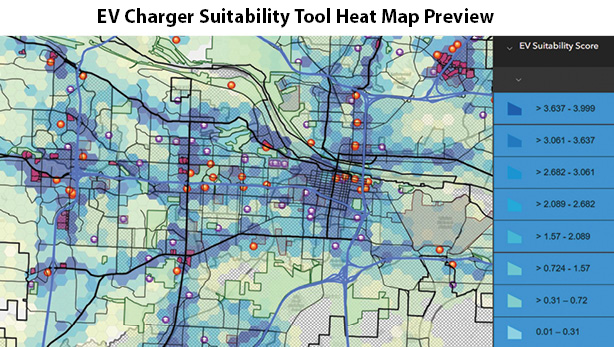
The image on the left depicts the Suitability Analysis Tool developed by Metroplan. It is a web-based heatmap tool that assists with identifying likely sites for EV charger deployment based on factors like multi-family housing density and workforce concentration.
Powering from Solar at Lexicon
Lexicon, Inc. is headquartered in Little Rock and employs 3,400 workers nationwide. It runs steel fabrication shops—one at the Port of Little Rock and two in Blytheville— and is also an industrial contractor and a builder of golf courses. Lexicon does not make steel; it assembles steel parts into units like industrial beams and girders. While much fabrication is done on-site, the company also builds industrial facilities, like data centers and giant warehouses. It builds huge industrial sites for steel and auto manufacturers, including all the steel mills in northeast Arkansas near Blytheville.
This business of assembling steel parts demands a lot of electric power. A few years ago, boosted by federal incentives, Lexicon contracted with Seal Solar to build two solar arrays: 20 acres in Lonoke County (2.5 mw) and 10 acres in Mississippi County (0.95 mw). This has proven a winner, even after changes in state net-metering laws that have reduced compensation for solar contributions to the grid. In economic terms, by using solar, Lexicon offsets 70% of its electric usage in Arkansas, albeit with some variability due to monthly weather. This is more than good budgeting. It also helps win contracts to build industrial facilities from Hyundai, Volkswagen, Tesla and others— international companies which have pledged to reduce emissions.
While robots do about 20 percent of the work, Lexicon nurtures its human workforce and partners with local education providers—especially Mills High School—to train youthful programmers, welders and fabricators. The company now flies drones over its construction sites to perform quality checks and measurements that speed production and improve overall efficiency. Work has shifted in just a few years from manual measurement and riveting to using CNC machines that assemble parts with unprecedented precision at speeds considered impossible a few short years ago. Solar energy is quietly behind the scenes, powering a thriving and growing enterprise.

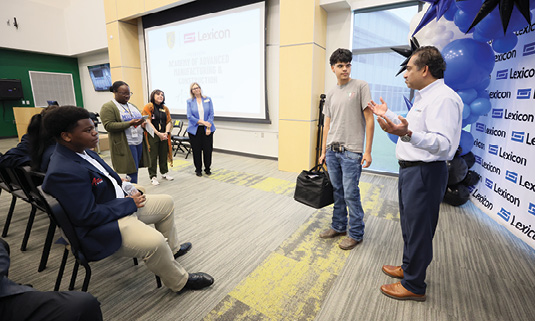
The two photos shown here are courtesy of Lexicon.
Leading the Trend at Seal Solar
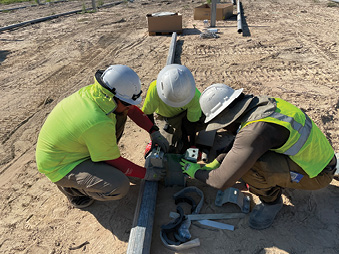
In 2012, Seal Energy Solutions opened for business, providing energy audits and insulation upgrades for businesses and homes—the term “seal” refers to sealing leaks for improved energy efficiency. The business was highly successful, but around 2016 its team grew excited about the promising trends in solar energy, and by 2019, with a name adjustment, the switch to solar was complete. Today Seal Solar installs photovoltaic (PV) solar panels and batteries with a staff of about 40 employees.
We talked with Josh Davenport and J.D. Poole at Seal Solar, and gained crucial insights into their business and the future of solar energy in Arkansas. Electrical demand is surging, propelled in part by the rapid expansion in data centers for AI. Also, more energy users are switching to electric power. Electric systems tend to last longer than fossil fuel alternatives. For example, a typical solar array has a warrantied life cycle of about 25 years. Even after the warranty expires, panels typically remain about 80 percent efficient.
Seal Solar does most of its business with commercial customers. Solar is particularly effective in agriculture, with critical activities like irrigation water-pumping and grain drying that demand heavy (and expensive) power loads. Solar pays back quickly for these customers.
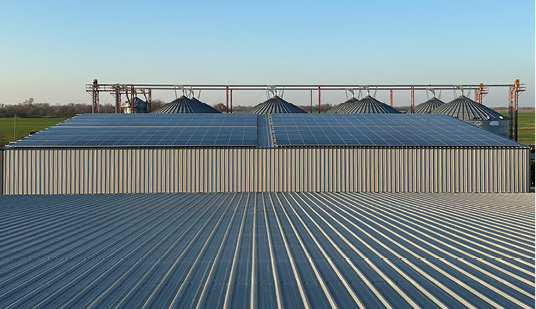
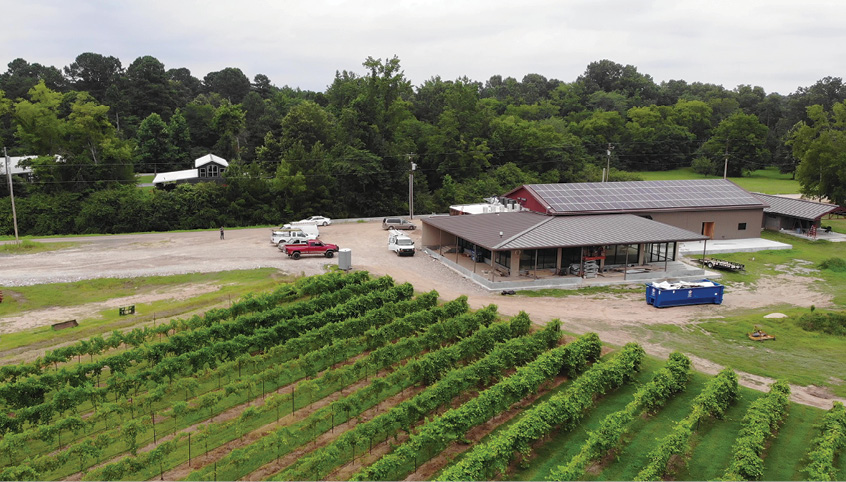
With the help of USDA Rural Development, Rusty Tractor is Arkansas’ first 100 percent solar powered vineyard.
State law on “net metering” changed in late 2024, meaning solar providers selling electricity back to the grid are compensated at lower wholesale rates, rather than retail rates. This has tended to shift the business toward larger solar arrays to gain economies of scale. More operations are now “behind the meter,” i.e. providing power directly and off the main grid.
At the same time Seal Solar also does business with residential customers. Higher interest rates since 2022 have increased costs and dampened demand, but Seal Solar still serves residential customers, often filling the gap as other businesses exit the sector in face of altered federal policies.
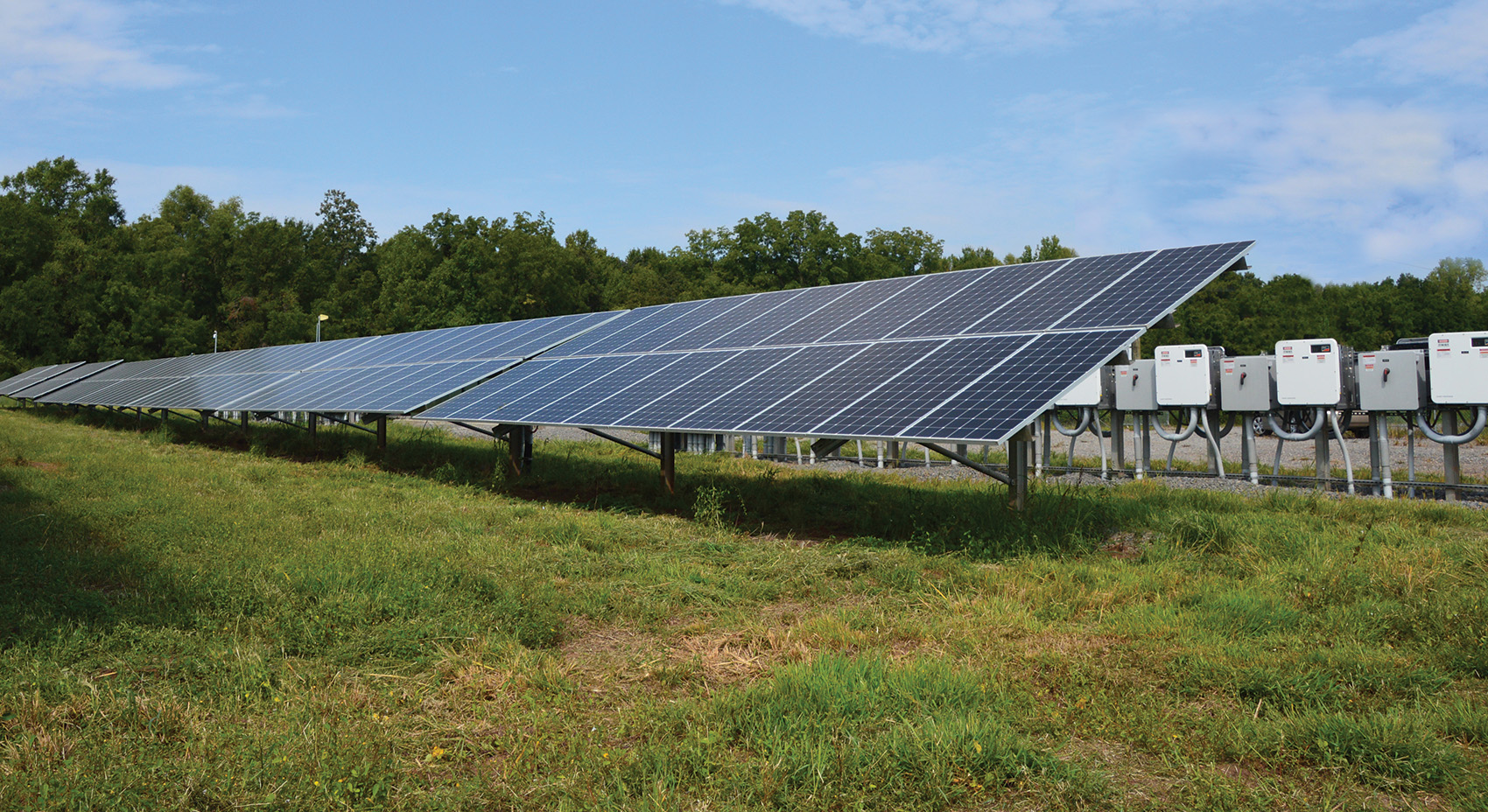
Seal Solar sees opportunity in its Arkansas home environment. The state gets a lot of sunshine, with plenty of flat land without shade, especially in the Delta region. Despite criticism about displacing land, solar only occupies about 0.2 percent of the state’s agricultural land, and even in case of an “extreme level of solar development,” would still use less than 1 percent.
There is a niche to develop a “green collar” workforce around the local solar industry. Tariff requirements give an edge to domestic manufacturing, and the state is notable for its rapid-response workforce development.
The winding down of federal tax incentives has added some headwinds for the solar industry. Solar costs have nevertheless fallen below those of fossil fuels, and will keep dropping.1 The business prospect remains promising.
1 Economist, September 16, 2025.
Renewable Power Generation Costs in 2023, International Renewable Energy Agency.
Annual Energy Outlook 2025, U.S. Energy Information Administration.
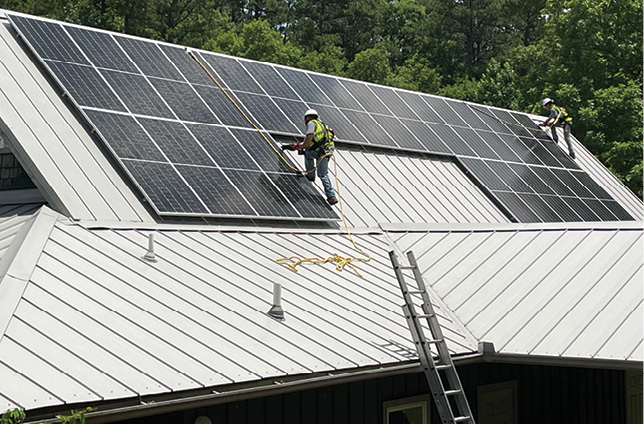
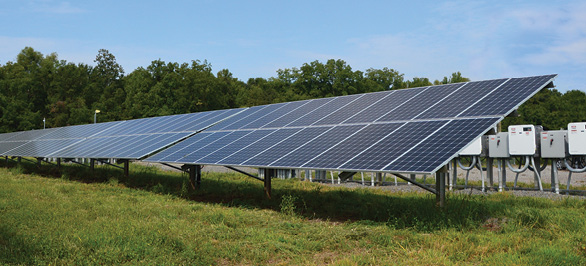
The five photos shown here are courtesy of Seal Solar except for the featured image.
Pulaski County Reaps the Solar Harvest
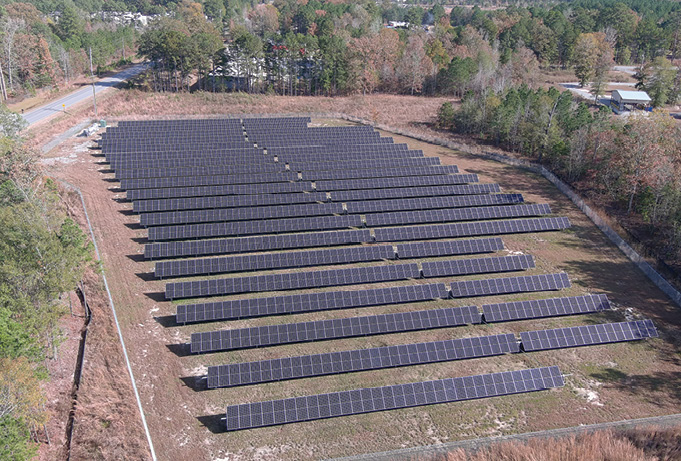
With solar arrays at the Port of Little Rock and near the County Detention Center, Pulaski County government generates about 90 percent of the electricity it uses. This saves about $250,000 every year. As Pulaski County Judge Barry Hyde said, “To be innovative requires commitment and belief that there are more efficient ways to do things. Flipping the switch and bringing this solar array online is the result of a tremendous amount of resolve, planning and a desire to propel Pulaski County into the 21st Century.”
Clinton National Airport Goes Geothermal
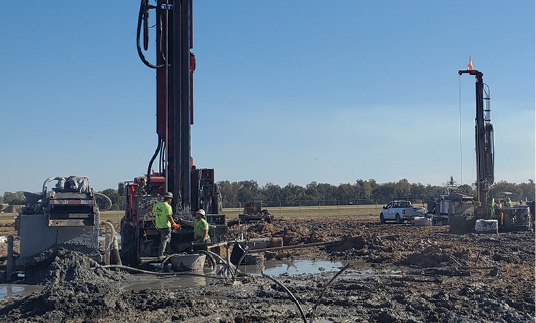
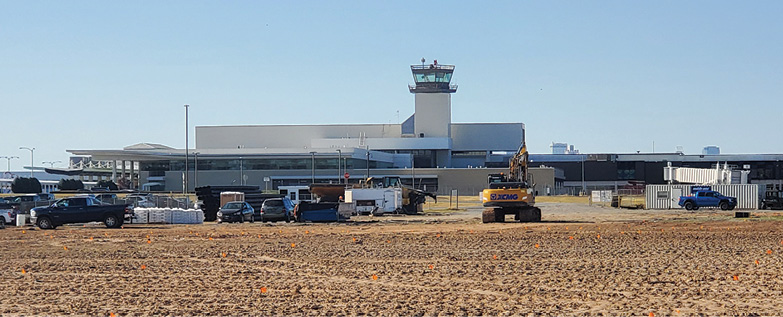
Construction is currently underway for a geothermal field at Little Rock’s Clinton National Airport. Funded by Metroplan with the help of a CPRG grant from the EPA, the system will power the airport’s heat and cooling needs. The land will help with transportation too, since once the underground geothermal field is complete, it will do double duty as a surface parking lot.
Energy Opportunities Abound for Local Governments
This newsletter edition points to a coming era of abundance in energy. While that sounds hypothetical and theoretical, opportunities exist here and now. Local government agencies can benefit from Metroplan’s ESPC Cohort program, which offers technical assistance and stipends to reduce energy efficiency contract costs for cities, counties and schools. Whether your goal is to insulate buildings, install solar panels, or many other potential cost-saving strategies, we can help you to develop a scope of work and to issue RFPs to qualified Energy Service Companies. The ESPC Cohort program can help you start saving costs within a short and practical time window.
Solar Generation Forecasts
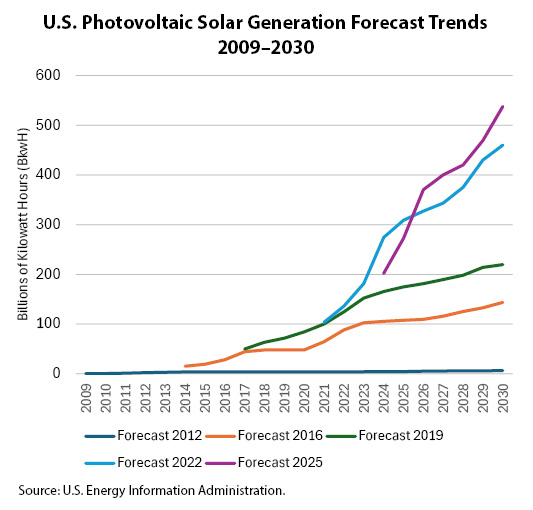
The chart at right shows forecasts made for photovoltaic solar power (PV) by the U.S. Energy Information Administration (EIA) since 2012. As you can see, the EIA has repeatedly forecast exponential growth, yet actual PV solar output has grown even faster. The one exception in this chart is the 2022 forecast, which exceeded the real trend in 2024 and 2025. Yet even this forecast, done when federal policy favored solar power, runs lower than the 2025 forecast which was made after a reduction in subsidies. Market forces are at work.
Two warnings are in order: (1) no trend will go exponential forever, and (2) solar is not the only rule-changer in the game: other renewable power sources like wind have also repeatedly exceeded forecasts.
The key takeaway is that, despite cost hikes and constraints in today’s electric power supply, the future of energy will depend less on fossil fuels and more on renewable sources. It will be a future not of scarcity, but of unprecedented abundance.
Recent Posts
January 05, 2026
Press Release: 2025 Metrotrends Economic Review and Outlook
January 05, 2026
Metrotrends Economic Review and Outlook 2025: Full Report
January 02, 2026
Metrotrends Economic Review and Outlook 2025: Economic Trends