Forecasting the Future: The Central Arkansas Housing Outlook
When we quizzed a local developer about the regional housing market’s short-term future, he gave us a revealing laugh. That’s the secret of the business. Every decision is a guess; every new project a gamble.
We can nonetheless build a forecast, based on trends and data. Central Arkansas continues building homes and apartments. Finance markets are the constraining factor. In the pandemic years 2020 and 2021, many buyers took advantage of super-low interest rates to snatch up homes. Some of them may now want to trade up, but are reluctant since any new home purchase would lock them into higher rates. This circumstance challenges first-time buyers trying to crack into housing markets.

In the longer run though, demographics shape housing demand. Housing market growth is driven by household formations—the change in housing units due to demographic change and economic factors. When a young person climbs the income ladder and leaves parents to set up a first apartment, that is a “household formation.” Separations, divorces, and other lifestyle changes also create new households. There are negative flows too, when an elder adult dies or moves into a nursing home—technically “group quarters.” Migration is constantly adding and subtracting households, too.
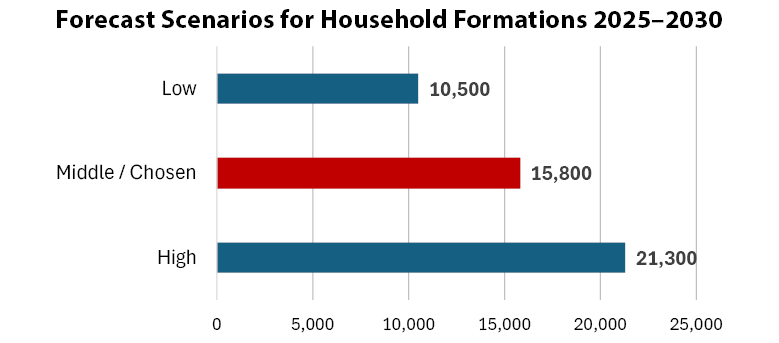
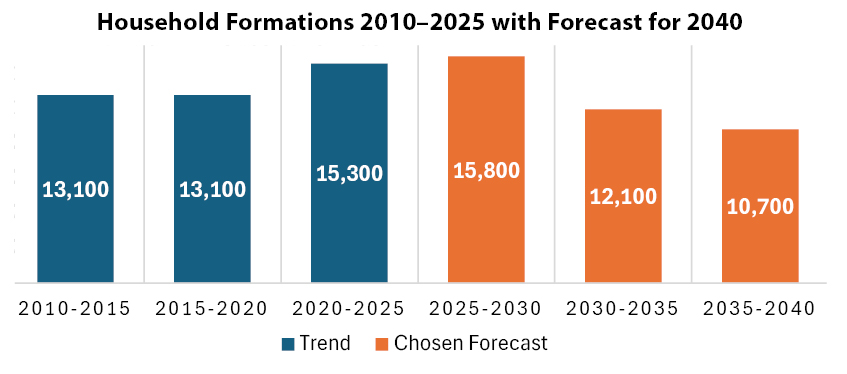
Metroplan’s forecasts can help with querying the future. Central Arkansas saw 15,300 new households formed from 2020 to 2025, a net gain over the previous 2015–2020 period. Metroplan’s demographic forecast attempts to predict the future, based on known demographic trends like births, deaths, and migration. Based on these trends, we forecast 15,800 new housing units will be added from 2025 to 2030, with “high” and “low” forecasts depending on varying economic and demographic changes. Since the Central Arkansas region has a track record for steady, reliable growth this casts a vote for the middle path.
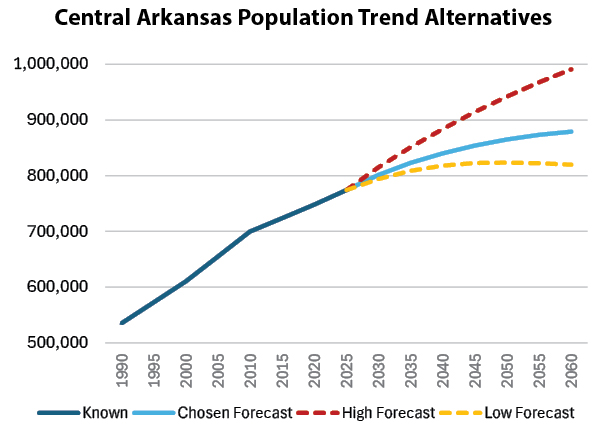
The following charts give a summary of Metroplan’s newest population forecast for Central Arkansas out to the year 2060 with three alternatives for the future. The “Chosen” (or middle) forecast assumes that regional in-migration will continue at the pace from 1990 through 2024. The “High” option depends on migration rates from 1990 to 2010, a period of fast growth in Central Arkansas. The “Low” scenario uses migration rates from the period 2010 to 2020 when in-migration to the region ran slowly.
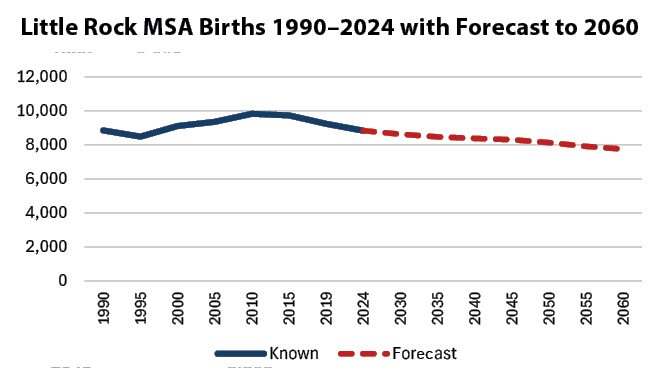
The next chart shows Metroplan’s forecast for births. Birth rates have been declining for decades but the decline has steepened. The forecast assumes this decline will slow gradually over time. Fertility is the biggest question for future population growth. Forecasts by the United Nations and the U.S. Bureau of the Census also assume declining fertility. The housing forecasts shown on page one are based on the population forecasts shown here. Forecasts always have a margin of error, and are modified and updated regularly. The shorter the term
of the forecast, the less error there is likely to be.
Housing Yesterday and Today
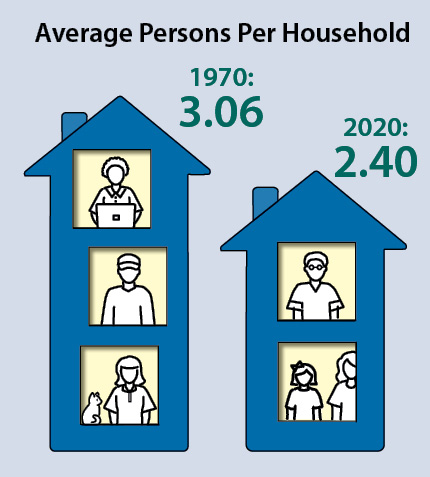
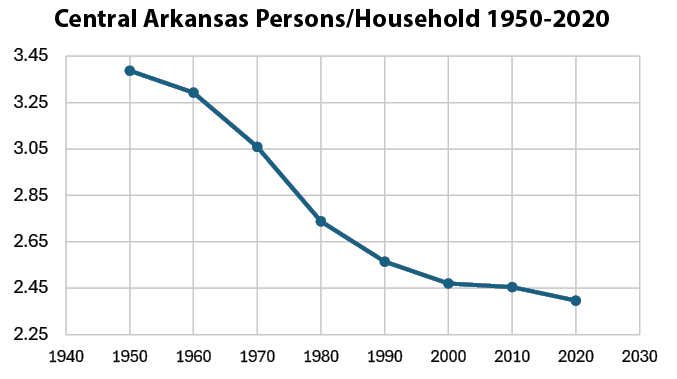
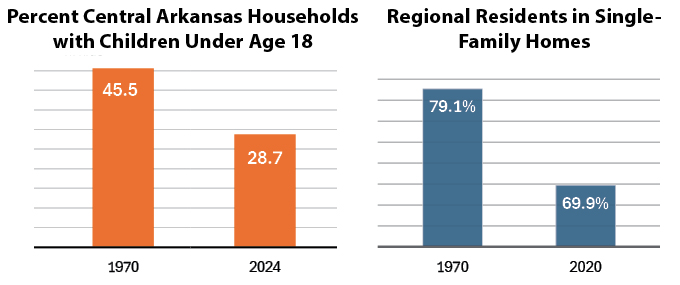
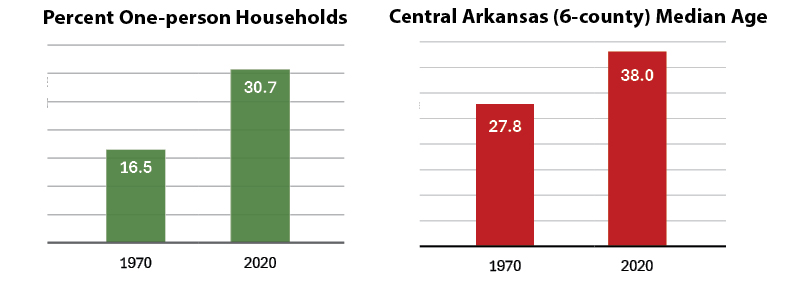
Housing is always changing, and the demographic factors which drive housing markets are in flux, too. In 1970 the average housing unit in Central Arkansas contained slightly over 3 persons. Nearly half of all households consisted of families with children. It was rare to live alone: single-resident households were about one in six.
A half-century later in 2024, there were about 2.4 persons in each household. Just one quarter of households contained children. Living alone, meanwhile, has become much more common, accounting for 30.7 percent of all households, or nearly one-third.
The region’s overall statistics have changed a lot, too. From 1970 to 2025 Central Arkansas population grew by over 50 percent, from about 396,000 to 774,000. Over two-thirds of regional population was in Pulaski County in 1970; by 2025 nearly half lived in five outlying counties.
Back in 1970, population in the region’s downtown and near-downtown areas was declining. Older inner-city neighborhoods had seen their housing stock demolished through federal Urban Renewal programs, and inner-city housing was in decline. Almost all housing growth was in the suburbs. Nearly four in five (79.1 percent) of regional residents lived in single-family homes.
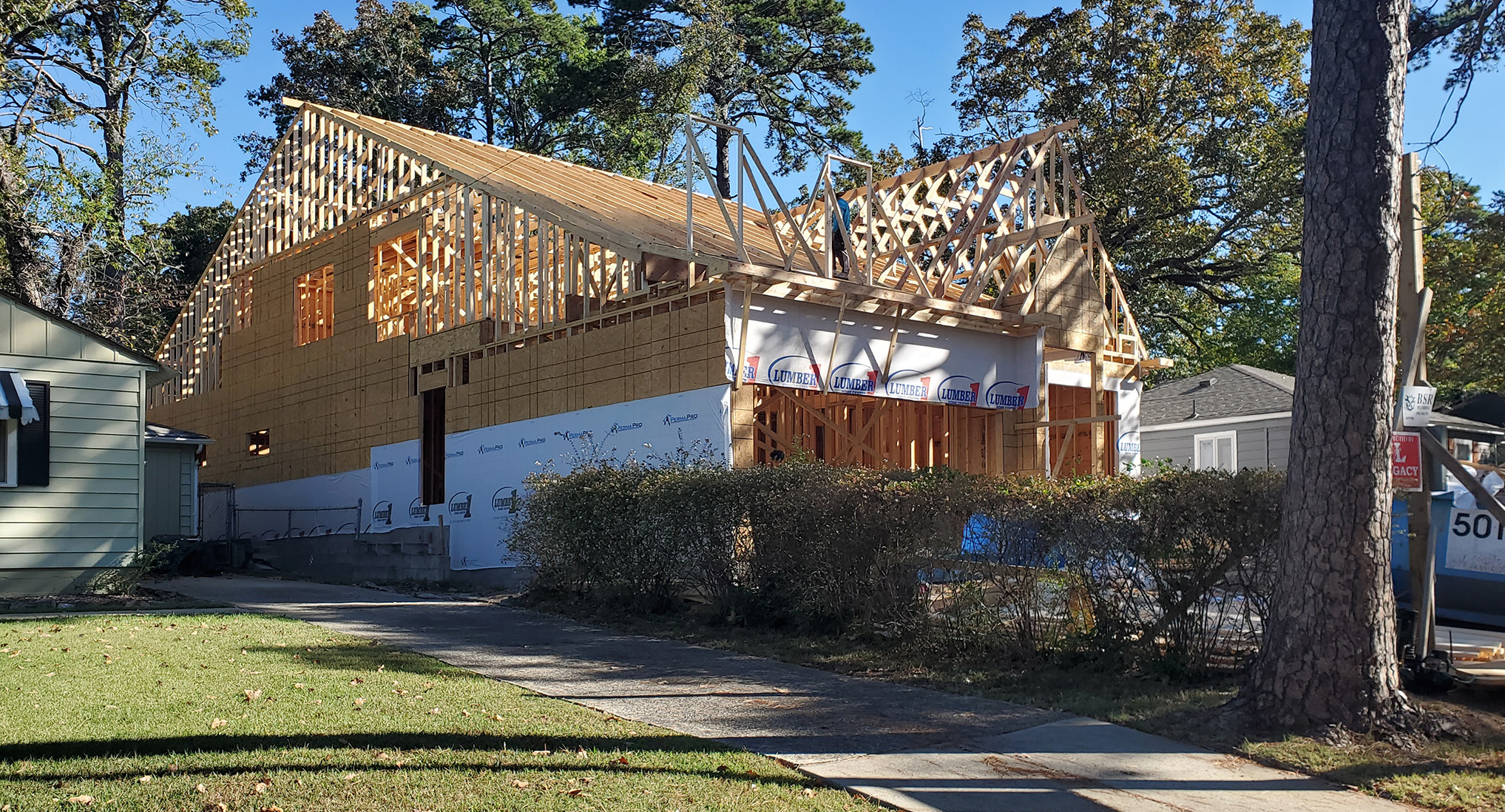
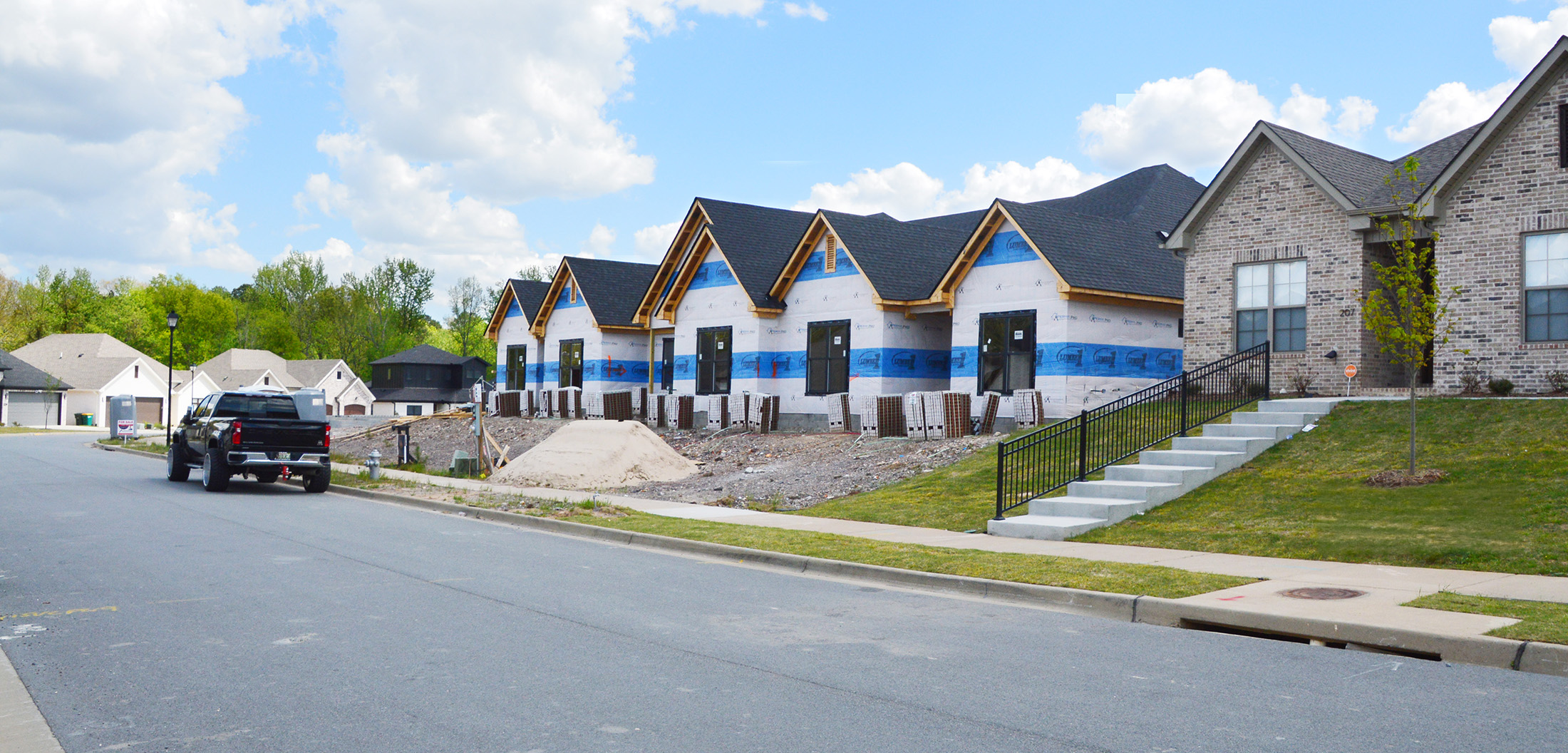
Today, single-family homes account for a smaller share, but still the majority— 69.9 percent, almost 7 in 10 homes. Suburbs are still developing, but the pace has slowed and a rising share of new housing construction is “infill” development in older areas, typically downtown and midtown neighborhoods.
Developers who do innovative townhouse and/or mixed use projects can reliably fill up units they construct. The challenge is instead on the front end: overcoming institutional inertia from financial markets and governments. Behind the scenes, investors still prefer the known risks of so-called “greenfield” development on the suburban fringe to the less familiar market conditions of urban and mixed-use projects. Developers also told us that while most city planning departments support infill/new urbanist projects in principle, carrying through an innovative project is a heavy lift in practice. Even when a new project conforms with local land use regulations, existing neighborhood residents resist new housing developments in public meetings.
A Tentative Glimpse at the Future
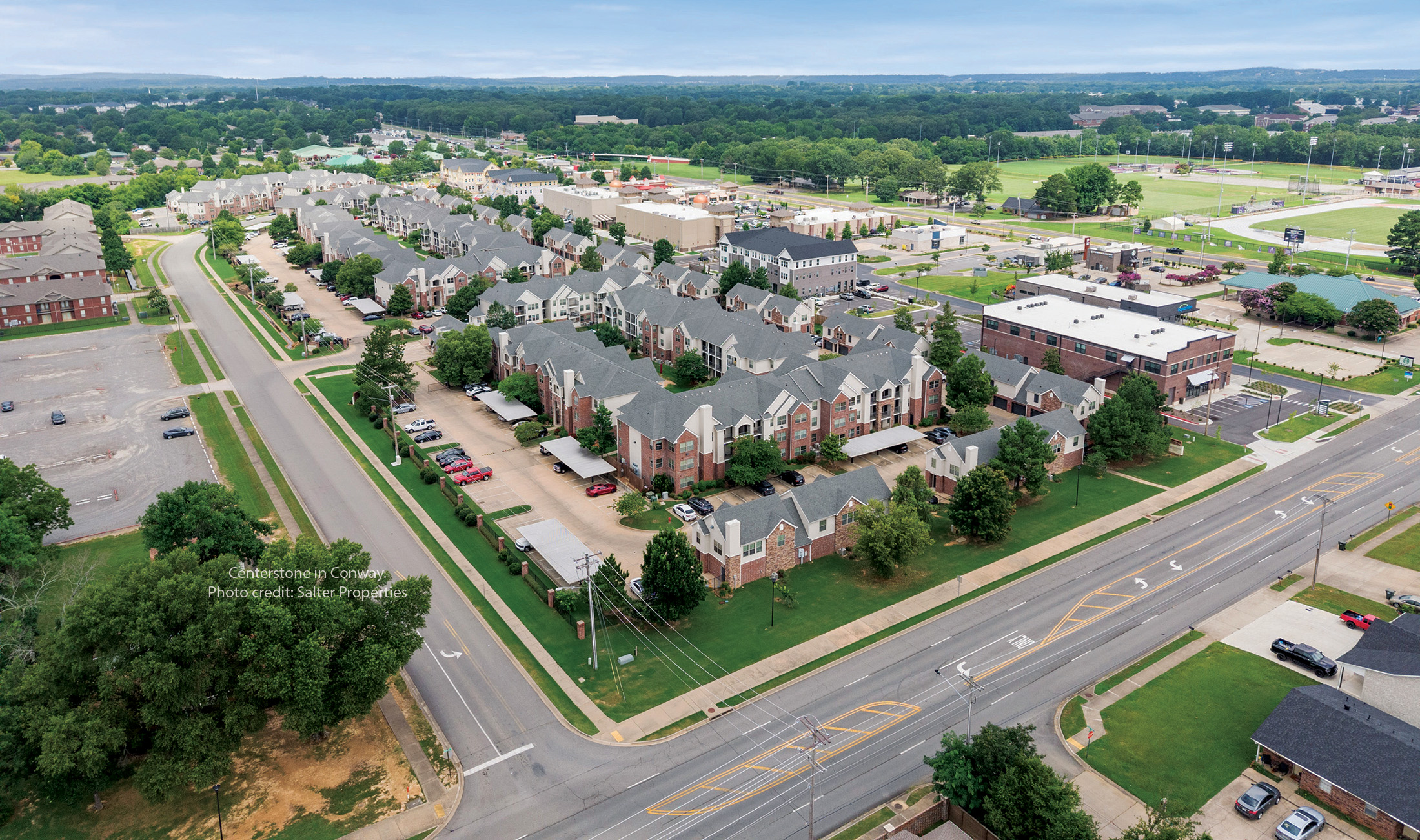
Looking toward the future of housing, the recent past gives hints. Families are smaller and single-person households are more common. Roughly half of the housing growth in the region’s three largest cities—Little Rock, North Little Rock and Conway—is multi-family in nature, often occurring in urban and suburban infill sites. At the same time, the region’s suburban edge communities continue building “greenfield” developments of conventional low-density single-family housing.
During the 2030 and 2040 decades, population growth is likely to decelerate in line with national trends. Since infrastructure for suburban fringe housing is financed via debt guaranteed on the assumption of continued expansion, financial models might undergo some adjustments. There will still be some continuing expansion of greenfield suburban neighborhoods, but the emphasis may continue shifting toward reclaiming older areas.
New construction might be supplemented by retrofits to older housing. For tomorrow’s smaller households, buying or renting a house might be less about what’s inside than the environment around it. The old rule of “location, location, location” will still operate in any case, favoring areas with transportation convenience and good-quality amenities, like parks, trails, retail and recreation opportunities.
View the full Metrotrends Demographic Review and Outlook 2026 here.
Recent Posts
October 05, 2026
Metrotrends Demographic Review and Outlook 2026: Construction
September 21, 2026
Metrotrends Demographic Review and Outlook 2026
January 05, 2026
Press Release: 2025 Metrotrends Economic Review and Outlook